
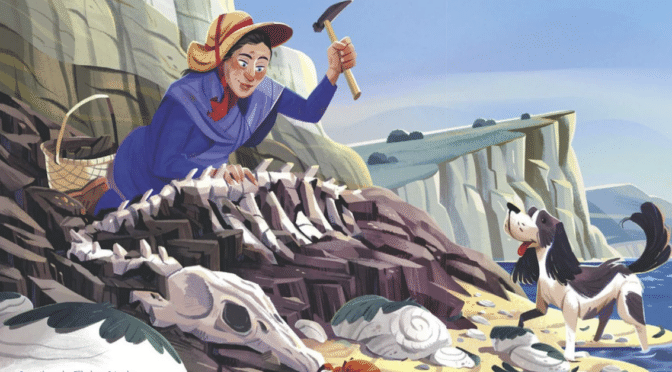
While perusing the e-shelves on the Libby app I stumbled upon this little gem called Geo Lino Extra. It’s a German Language magazine for kids 8-14, or at least the main GeoLino is, I am not sure about the Extra one. Always interested in how dinosaurs and paleontology are portrayed for kids I took a dive into Die welt für junge Entdeckerinnen und Entdecker (“The World for Young Explorers”) to see what it had to say about Die erste Saurier-Expertin de Welt (“the World’s first dinosaur expert.”) Even though none of Mary Anning’s finds–marine reptiles, pterosaurs, and invertebrates–were technically dinosaurs.
Continue reading Mary Anning Die erste Sauier-Expertin der Welt.Tag Archives: History of Science

The 12+ labors of Ralph B. Shead
For me, History is filled with people and things. I have never really indulged in the movements and theories and isms that seem to infect the past presently. For a historian this is a professional character defect, for me it is what brings history alive and allows us to find our connections to it. It is likely why I spent so much time learning archaeology and paleontology. I believe it is ultimately what lead me to the history of science so I could talk about all of that at once.
When I first came to OU and was getting settled across campus with the few people I had some connection with I was shown around the Sam Noble Natural History Museum. On the second floor back in the hallway to the VP lab and collections there are these two enormous paintings (13.5 feet long by 3.5 feet high). After taking in the scale and content of these behemoths I immediately looked for the signature. “Ralph B. Shead ’42” and “Ralph B. Shead ’34 (or 39 it is obscured by the frame I believe it is 34).

The Age of Wonder
As a trudge steadily onward towards the completion of a PhD, and comprehensive exams in a few months I will be topping off my reading with some curated history of biology-esque works that will provide a bit or mortar to hold my foray into field science post Darwin to the premodern foundations and their recourse of shaking off the prefix. The first in (what I hope to be) a long line of reviews, overviews, notes, and general idiosyncratic fancies (more for myself to study for comps than anything) is Richard Holmes’ 2012 book The Age of Wonder.
Continue reading The Age of Wonder