
About 30 years ago my grandfather travelled from Texas to Virginia to meet up with an old army buddy from their WWII days. James “Jim” McGrady (pictured on page 93 of the PDF) gave him this photocopied packet from a Battalion reunion held at the Holiday Inn Motel East in Syracuse New York on the 6-8 September 1990. I’ve finally been able to scan that in as a PDF and want to post it here so maybe someone searching something might stumble across it and add to it or take something from it for their own stories.
I knew my grandfather was in WWII, and I knew he was at Normandy. Aside from that and few remarks about what it looked like in color when the television showed old European footage he never really talked about it. I knew he was on a half-track at one time and that they were in the engineers building roads, clearing obstacles, and building those floating bridges. But I didn’t know he was at the Battle of the Bulge until talking with someone after his funeral.
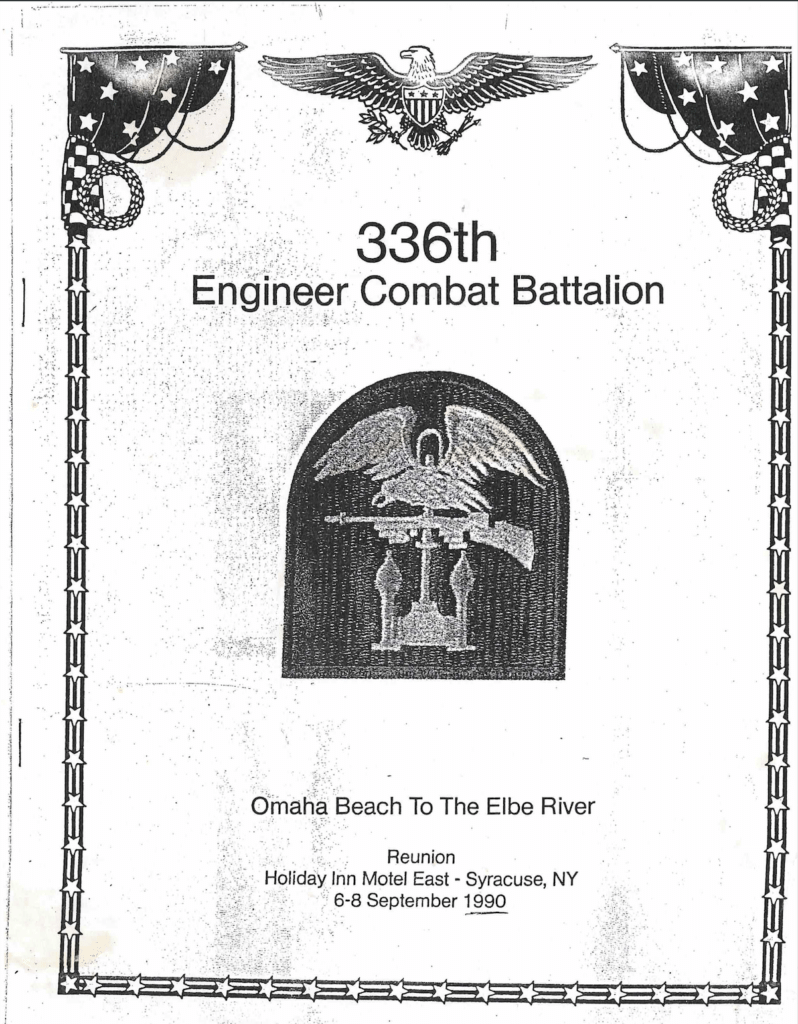
Above is the cover page of the reunion document. It’s 162 pages filled with notes, stories, photos, and a few letters. I haven’t seen the Unit folder updates listed yet, but the Eisenhower Library finding aid lists the 336th Engineer Combat Battalion in Box 654.
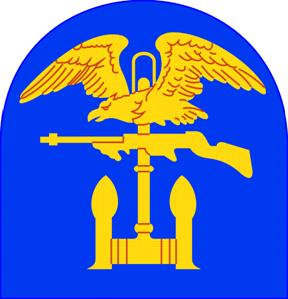
“The Amphibious Patch”
“In late May, 1942, at a conference in London of General Somervell, Lord Louis Mountbatten (then Chief of Combined Operations), and General Sir John Dill, it was decided that the Amphibian Engineers for that theater would receive their initial training in the U.S, and their final in England. It was further decided that the U.S. Amphibian Engineers would weat the Combined Operations Patch– gold tommy gun, anchor, and eagle on a blie field signifying combined operations on land, sea, and air. In Addition to denote the engineer amphibians, the War Department authorized wearing a pocket patch, a small sea horse in scarlet and white, the Engineer colors. It is interesting to note that Lord Mountbatten himself designed the Combined Operations patch and showed it to President Roosevelt.”
A portion of the official War Department Historical Division publication Omaha Beachhead (6 June-13 June 1944) is included in the reunion document. I’ve found a complete PDF of that publication online and saved it here as well. If for some reason the above link fails you can also find it on the U.S. Army Center for Military History’s website. The newer version has better photos than the photocopier captured when the original compiler made them from a copy at the Westport Public Library in Connecticut. Somewhere there is a photo of a standard issue army pillow that all of the members of his unit signed and that Jim kept all those years. If I can ever find it I’ll share it back here.
Jim passed away in 2010 . He was four months younger than my grandfather. His obituary notes he served in Company C, 336th Engineer Combat Battalion. My grandfather’s just said he was an “army veteran of WWII”. It’s hard to find breakdowns of the 336th and who was in what company. Some list it, some just go to the Unit list. There is even a great photo of B Company out there. There is a series of veteran interviews on youtube and this one of Staff Sgt. Leo Kiggins notes that it was “made possible by a grant from the family of Clifford Haugan, in honor of Clifford Haugan, Sioux Falls, SD, U.S. Army Company C, 336th Engineer Combat Battalion” and the producer/host Larry Cappetto says that Haugan served with Kiggins in the 336th but doesn’t specify it at the companylevel.
Page 28 of the PDF (or page 2 of “The Beginning”) records that Major Paul Bennet took command of the ECG on October 5, 1943. Just before the unit moved to Camp Myles Standish in Massachusetts and sailed to the UK aboard a ship called the Shawnee. There is a 2007 oral history interview with Paul Bennet conducted by his niece on youtube. Born in 1914, and a career military man, he died in July 2011.
I also found this 2019 article interviewing Bill Luke from The Spokesman-Review as part of their 75th Anniversary of D-Day coverage. It’s title echoing the reunion’s tagline “From Omaha to the Elbe” is why it came up in a search. If the newspaper’s site goes down or the archives get moved, I saved a PDF of that article, too. Bill was 94 at the time of that interview and a quick search revealed he passed away in January 2022, just about a month shy of his 98th birthday. I didn’t know Bill, and I don’t know if he was in the company my grandfather was in or another,–like the Kiggins’ interview it just lists the 336th–but he was only February to July older than my grandfather. Making him 20 and my grandfather (and Jim) 19 when they first visited the French coast. Their battalion commander (Bennet) was a decade older.
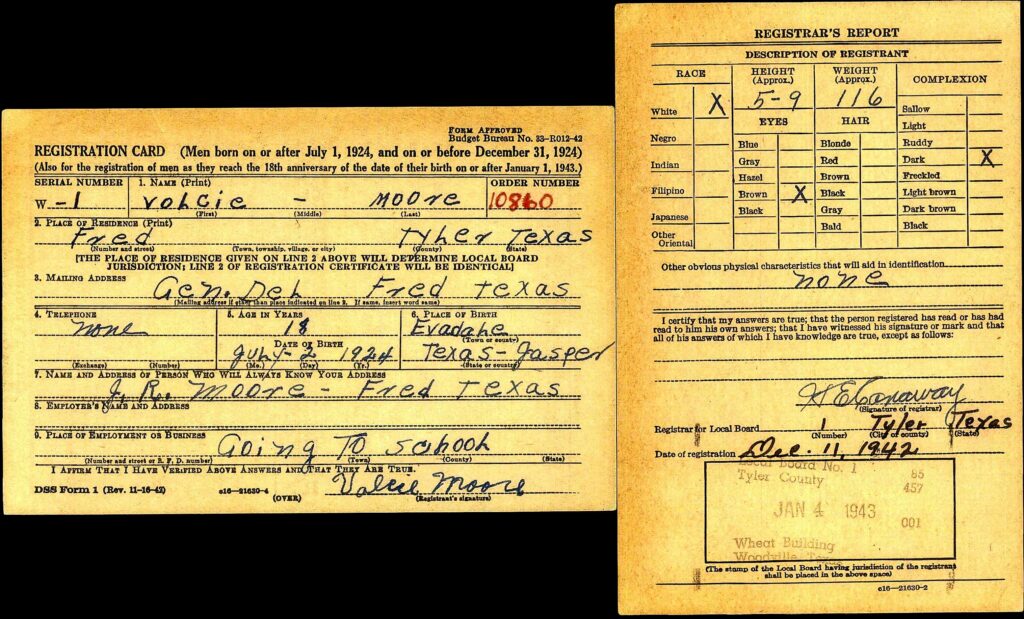
Registered in December 1942. He was enlisted in March 1943 and in 15 months was on the beaches of Normandy. It’s also interesting that while he grew 4 inches while in the army he never really gained any weight. Ever. One of his friends from his time working for the highway department told me once “We were sitting there eating lunch and I heard this strange sucking sound. I looked over and a mosquito has was stuck all the way through Volcie pulling air from the other side.”
My grandfather passed away in September 1998. He and Jim and Bill would all have been over 100 today, and they were some of the younger of the enlisted men. I think a lot about time and history and lived memory in my job and in my head, but it’s sobering to have watched–grew up–actively loosing the people who were part of this. Our connections to the past grow more abstract by the year which is why these kinds of documents are important, and preserving them however we can is one of the few things we are capable of doing. They can’t live as digital only, or physical only, each has its own limitations and challenges. But what we can do is make it digital and share it, and when we do that the more we share the more we have, and hopefully the voices and memories of those who lived it–especially those who had no capacity for maintaining memoirs, doing interviews, or otherwise sharing or publishing their accounts either for wont of resources or wont of reliving it–won’t be lost or silenced.
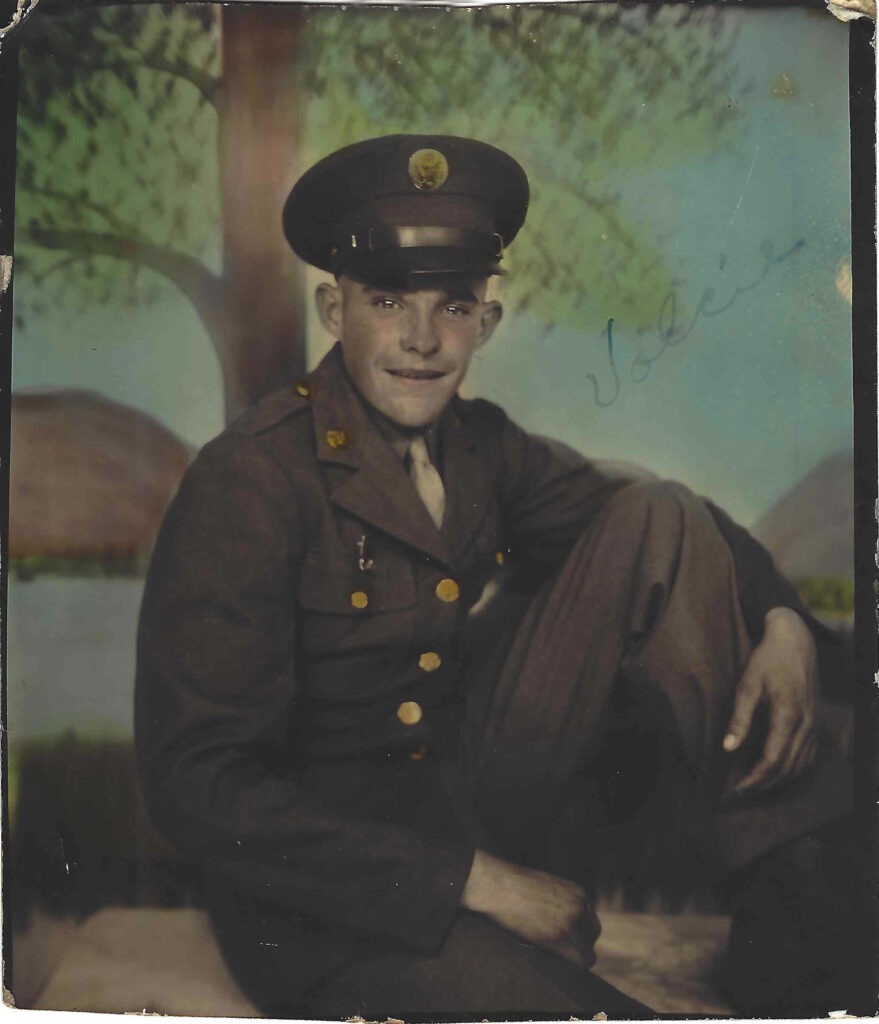
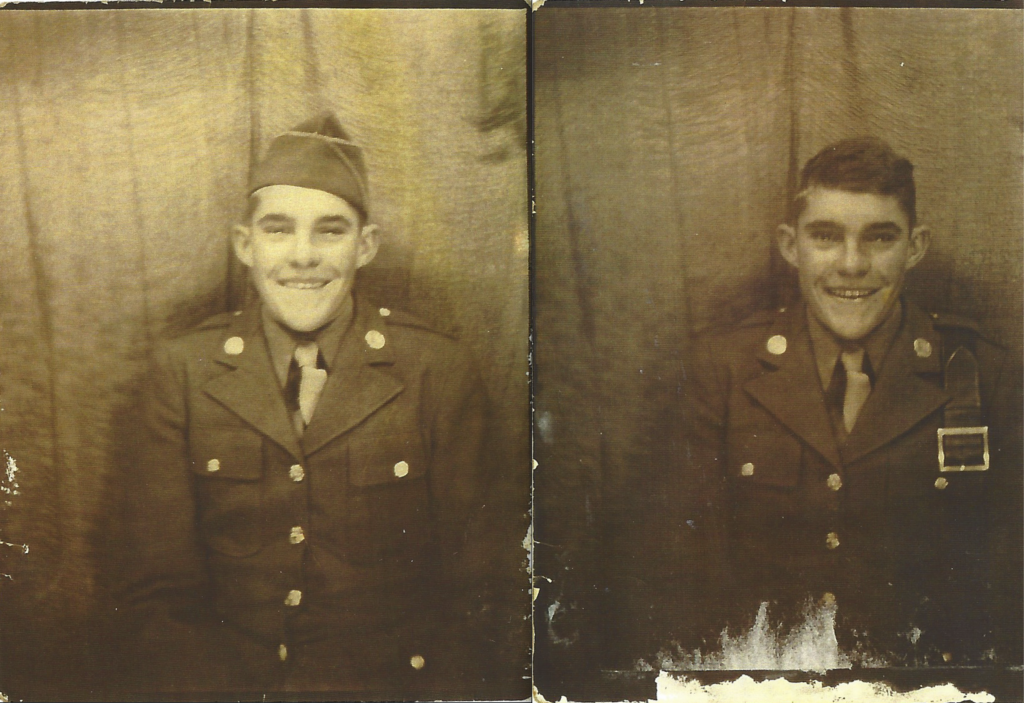
I said my grandfather never talked much about his time in the army other than a few anecdotes. But there is one thing he said more than once about being there and doing what they had to do, and he wasn’t a huge fan of the “Greatest Generation” branding:
“We were all mostly kids doing what we were told. We thought if we got through it and could win it, then maybe it wouldn’t have to happen again.”
Going to close with this now 30 year old video clip from our local news affiliate honoring him as a “hometown hero” and realized that it aired on the same date he registered for the service 54 years later.
