
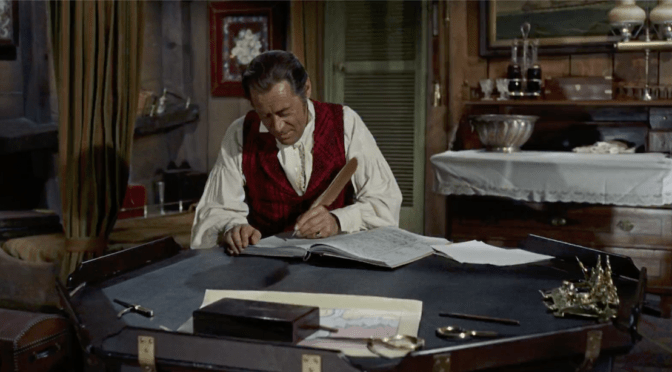
It’s that time of year again where the most recent purchase of a new and fresh planner, journal, notebook, or calendar will completely change your life. This time things will turn around as soon as you crack open the cover and lace the little attached ribbon across Page One.
Except it won’t.
But it could.
It just needs your help. And attention.
I am by far not a daily journaler or diarist. I do run with notes, ideas, quotes, songs, thoughts, and to-do things across a swath of physical writing materials though and I think this is where the hangup is. People will start and miss a day or two and then call the whole thing off. The key is just keep doing it. And to stop doing it on phones, tablets, and/or laptops.
I was talking again last night with some friends who are working intentionally on having a more analog life, which is a gas since they develop websites for a living. But I get it. We all need to. After sharing with them some things I have found that work pretty well across multiple occasions I realized I had enough in the text conversation to copy and paste into a short blog post. Doubly handy as I always wanted to do a short blog post. We’ll see how it goes.* They’ll also get the notification email for this post and go back to see the rest of the conversation. So much for cutting screen time.
I’ve kept pocket notebooks for years now, and you can see how my personalizing them has changed. Some became thematic as I kept notes for a radioshow I was working on one and other was discipline related and then just covers I made from scans of comic books or dvd cases. These were fun to look at and made me smile whenever they were closed, which they mostly are.
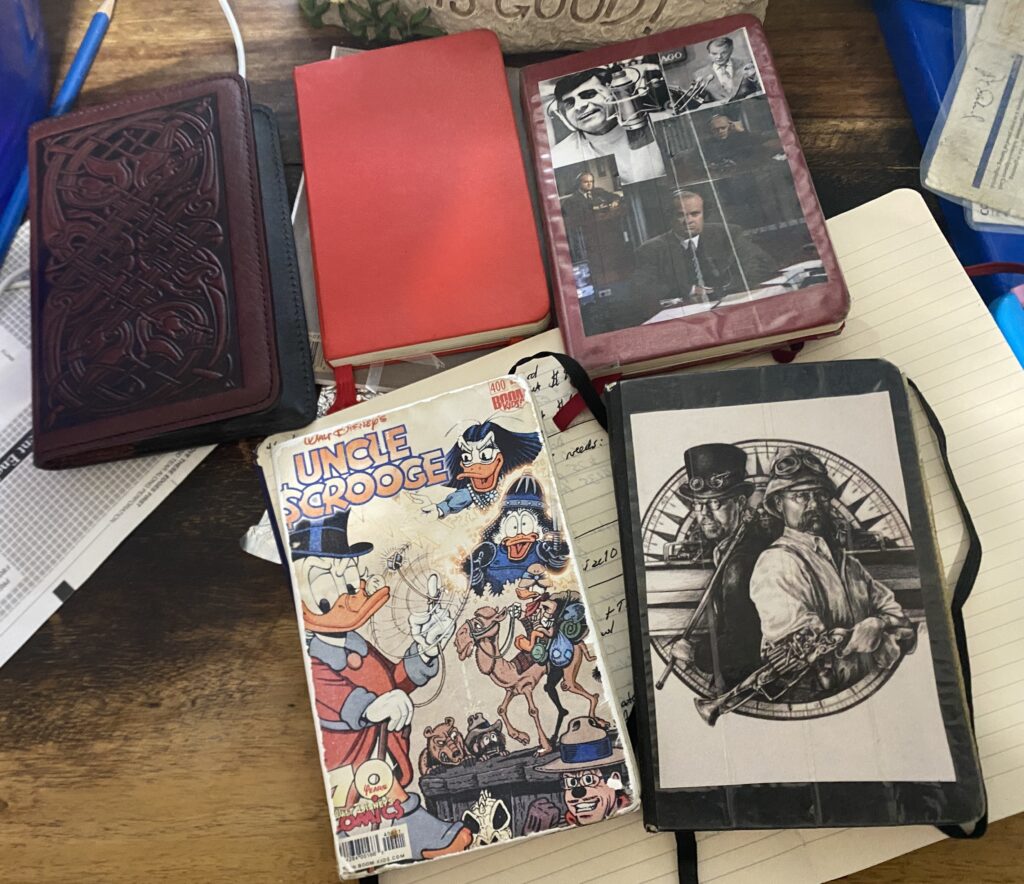
The only problem is that if I use my amazing leather covers from oberon design you can’t see the custom covers until they are full and have the leather cover taken off.
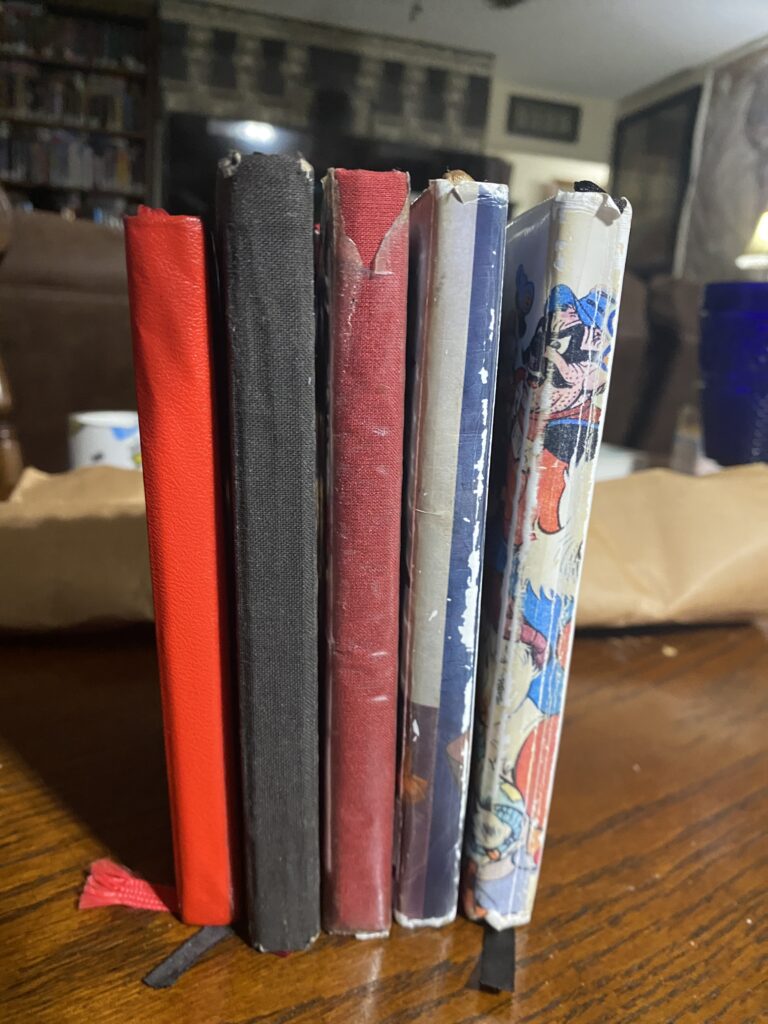
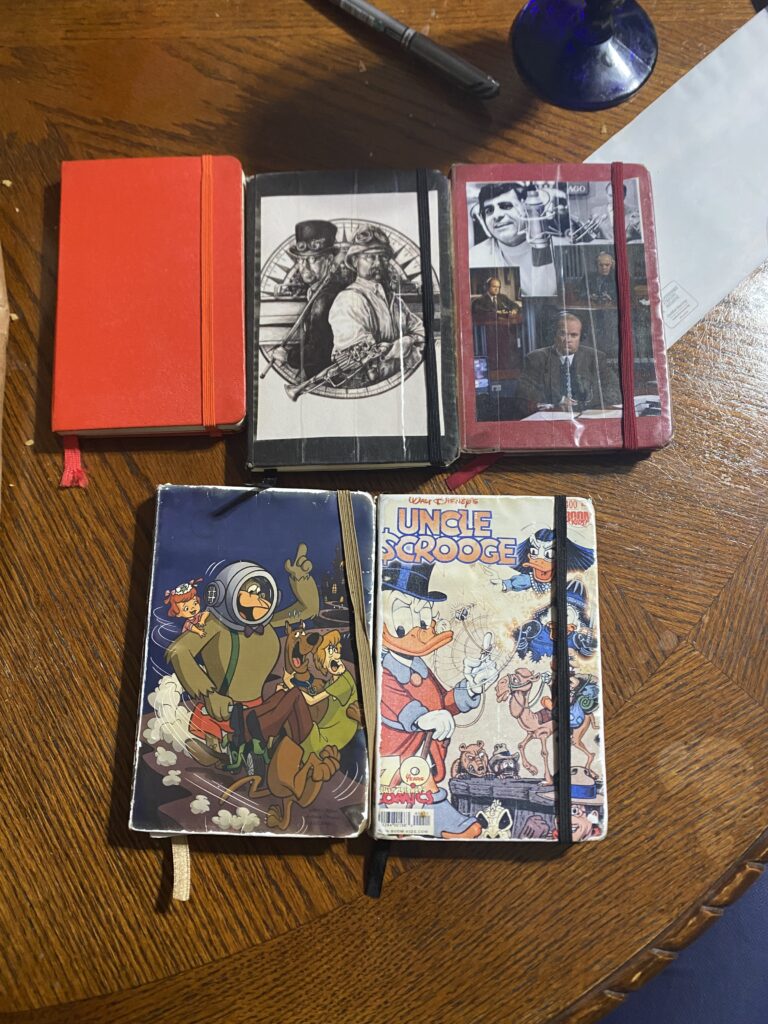
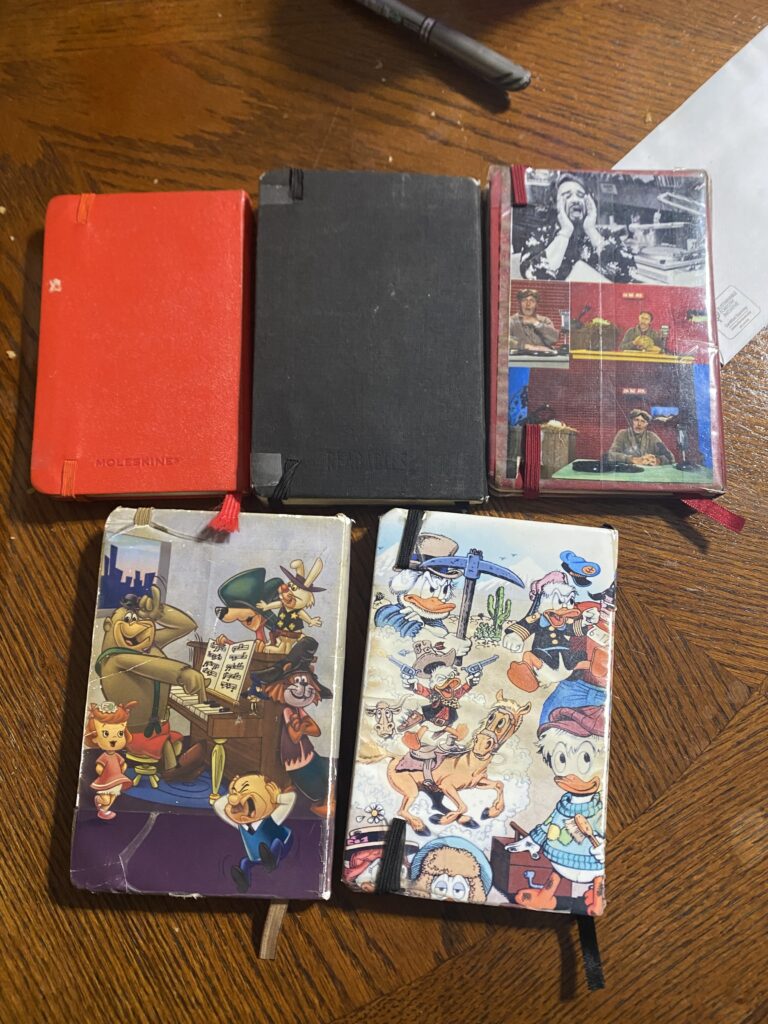
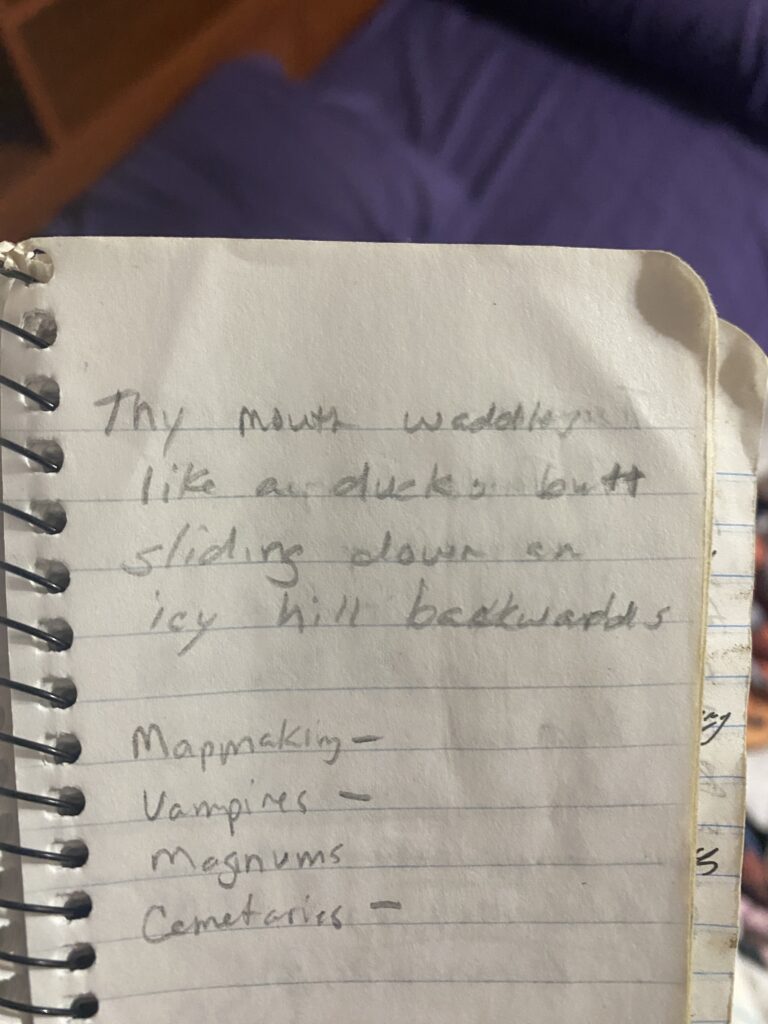
And it didn’t start with these, it started from little cheap spiral bound pocket notebooks that I started to carry because my grandfather carried one and I wanted to so. Never did fill it up, but I still have his last one that he didn’t finish. It’s nothing profound–grocery lists, telephone numbers, hospital room numbers of people he was going to visit, but it’s there, written down. I can see his hands moving to fill the page when I look at it.
My first spiral one has important things in it like this quote from I believe Whose Line is it Anyway? and a list of which The History Channel’s Modern Marvels episodes I wanted to get on DVD (remember when it wasn’t about Hitler and Aliens? These notes predate the History Channel turning into Lifetime for Men™)
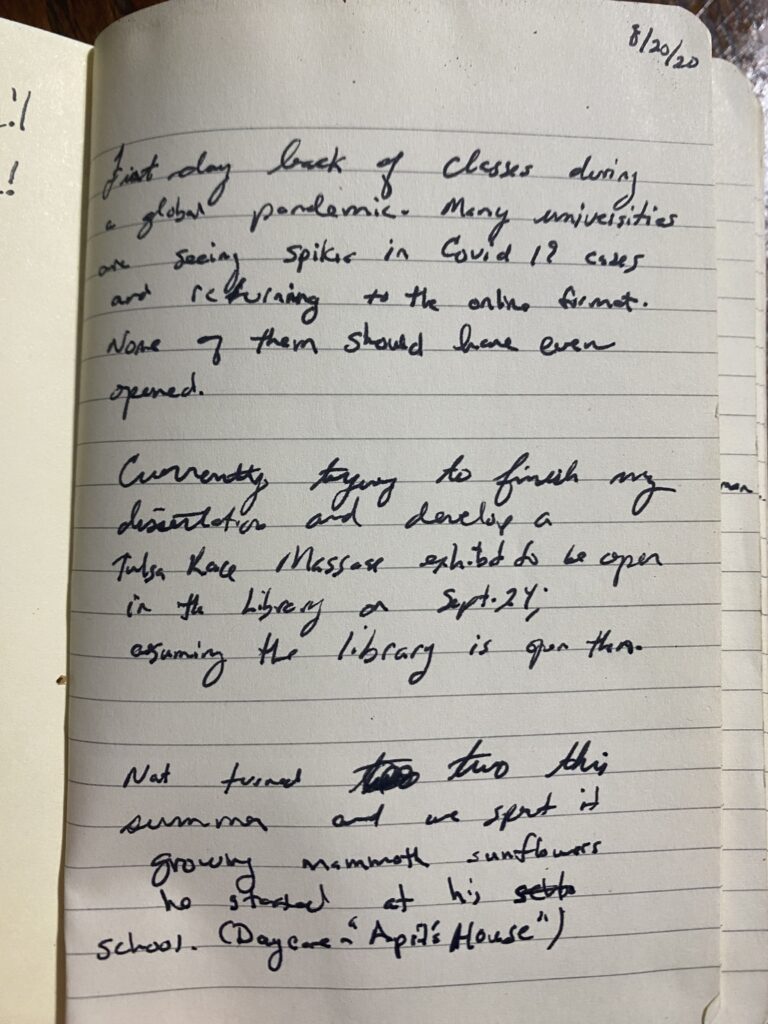
Your mundane will be a memory. Maybe you’ll capture something that someone might find interesting to read one day, or simply have your grandkids look at it and feel those marks on the page that you made.
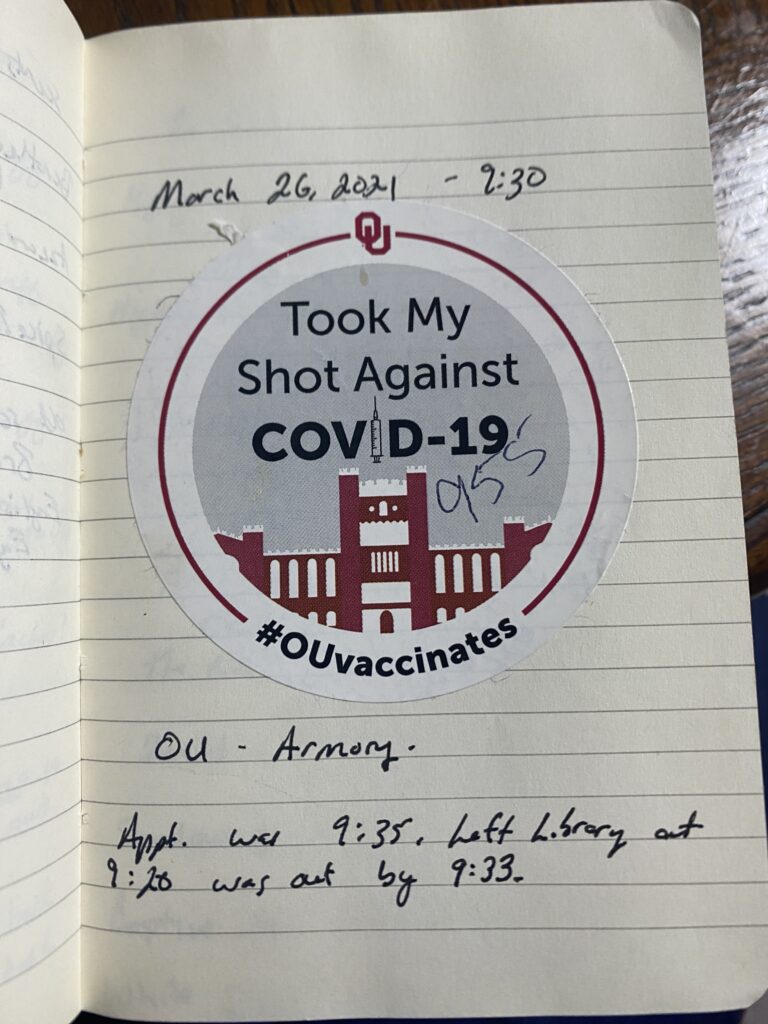
Or in this case major global affairs caught in sticker form which will eat through the pages long before someone uses this to reconstruct like in the first quarter of the 21st Century.
My current “general” use one is my Inspector Gadget notebook it’s a size that I have yet to buy a leather cover for so I get to keep the made cover. You may have also noticed the progress I have made in making these covers with scraps of material and printer calibration prints.
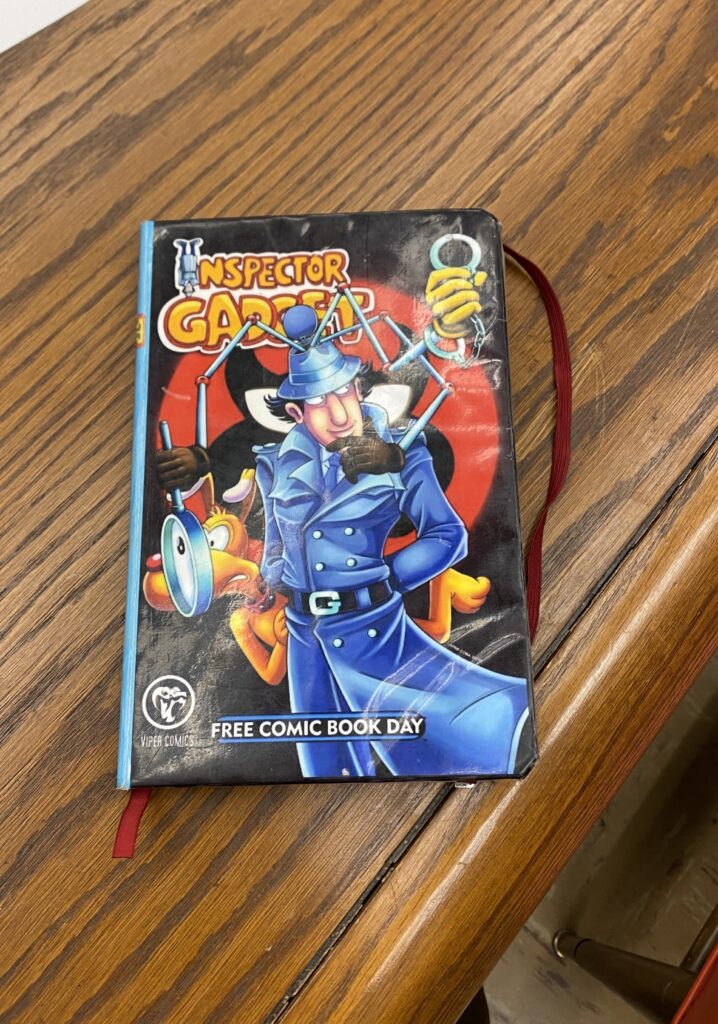
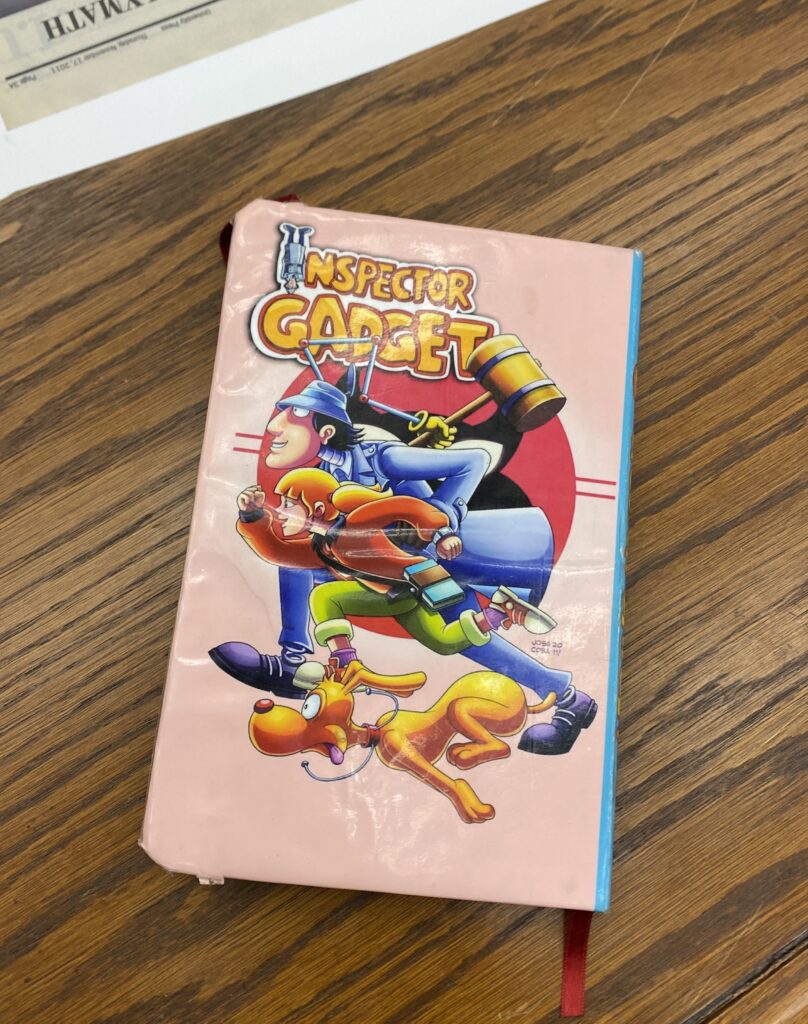
This one catches a variety of things. Thoughts, comparative price notes, thriftbook damages that are getting replaced or refunded, a rundown of fun things we’ve done with the kids, blog post ideas (there are lot of these–in fact that is one that has the idea of posting about something we did so it gets a little meta inside here sometimes).
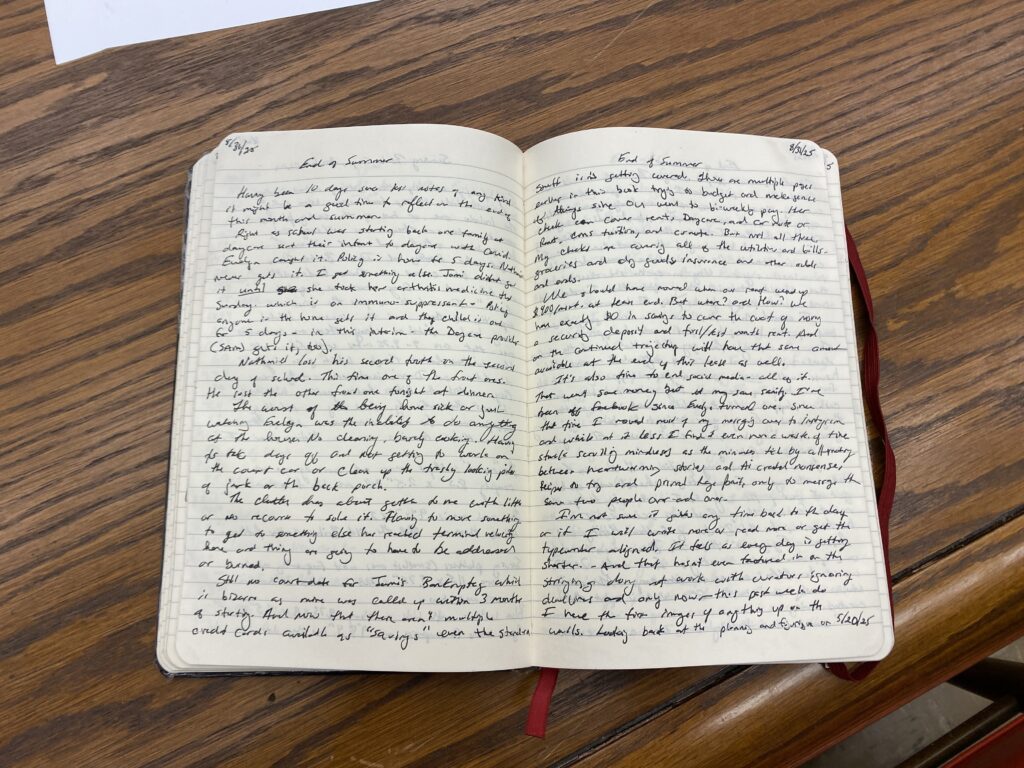
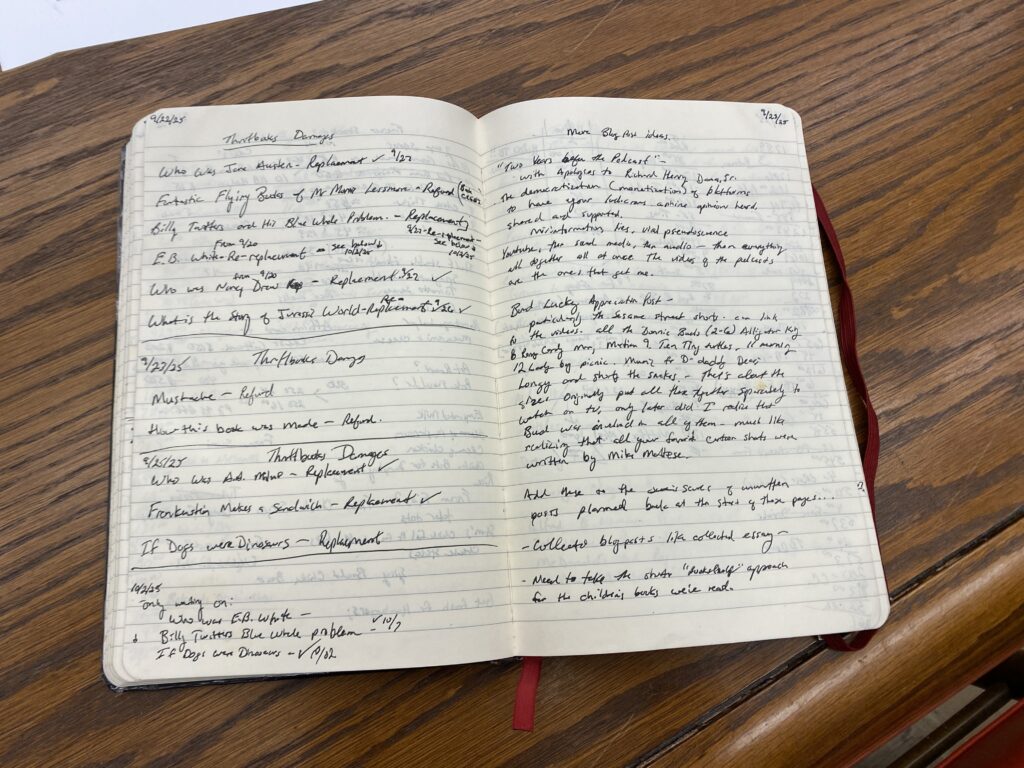
But you aren’t here to see this stuff, you stumbled across this because once I cared about SEOs enough to get my site into the search results and you search for planning or scheduling or journaling and didn’t want to click on the top 7 parenting/lifestyle blogs that all have affiliated links to things that are more fluff than substance in the organizational world.
There are enough tips, tricks, and mantras out there to help you schedule and organize, so I am not going to add to that. I am going to suggest that you add something to it and look at it from a different angle.
The “Reverse Planner” method is something that started with a damaged yearly planner that was replaced leaving me with an extra. I brought it home to my son and suggested he use it to write in like a diary. The five or six lines for every day keep it really compact and you aren’t daunted by a huge blank page in a composition notebook. He recently filled that one up, every day things he did at school, what he watched and read at home, etc.
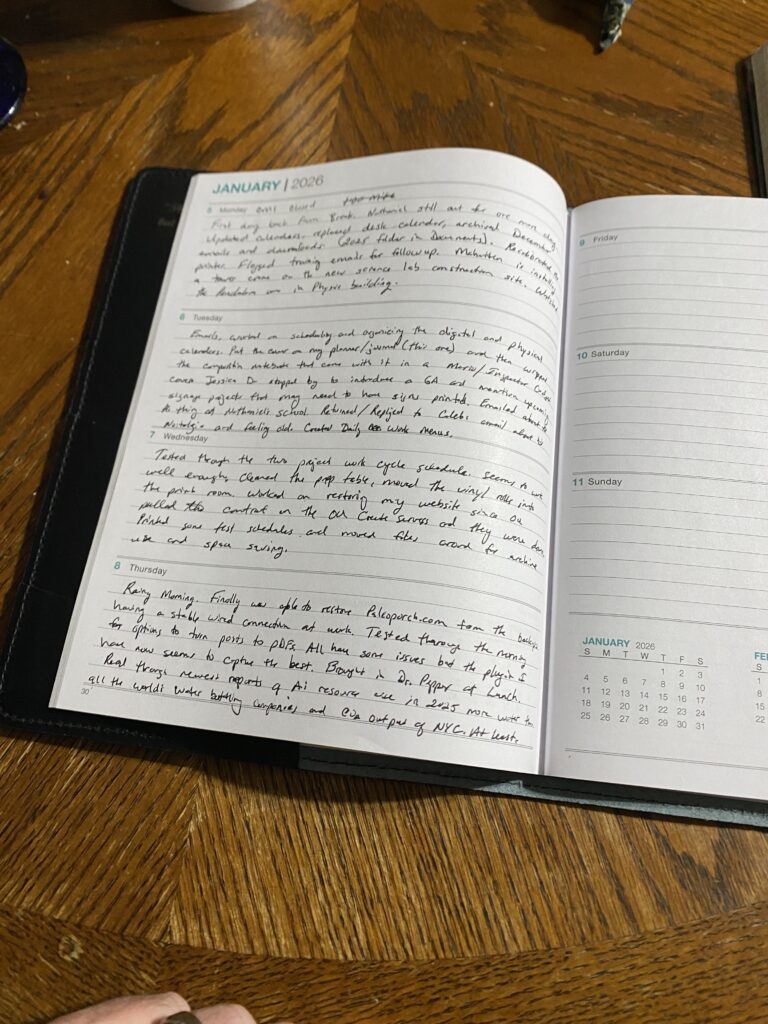
What I use it for in addition to my physical calendars–I like these because I can see the ghosts of cancelled meetings that the digital calendar just deletes in the name of cleanliness–is to record the day. At the end of the workday it takes five to eight minutes to ping off what I got done. Then you can go back and see what projects are causing problems, what things are holding up other things, etc. But the main thing is having it to flip through when you are in the doldrums and thinking that you haven’t gotten anything accomplished. It’s the bound equivalent of keeping thank you notes and cards in a drawer. Look! I have done all this stuff, it was all little things for a couple weeks and there is nothing to show for it but maybe a caught up inbox. Emails count. Even if you just write down the word “emails” and that is it for the entire day.
It was therapeutic, if not cathartic, to be able to go back through my entire 2025 in a few flip throughs and see that actually yes, I did do much. A lot of it was a bunch of not much at a time stacked on top of one another, but stopping in March I saw the early planning for how things turned out and were celebrated in in September, and that was nice.
There are two other steps I want to suggest that you add to this, one is a modified version of the work menus my son has at school with adjusted sections of their work cycles on either end of lunch. I call mine “projects” because I am usually working on multiple, discrete exhibits and can us the AM and PM to help delineate between the two especially if they are in similar stages of production, backlog, and/or purgatory.
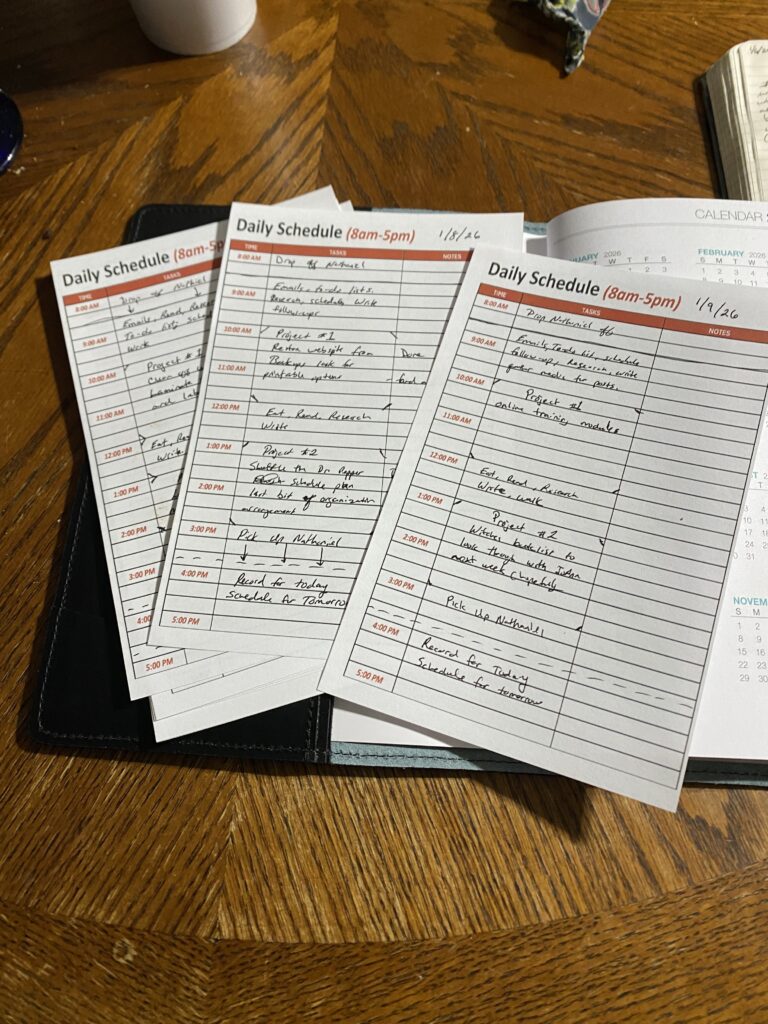
I do these right after I record for the day and I do them for the following day. The important thing here is these are not “to-do” lists. These are just broad sectional breakdowns of what happens and roughly when during the day. It’s also easy to see what you completed and what will be continuing on the next day. I may work on the same exhibit project for two weeks but one day it is design, one day it is panels, one day it is editing text, two days it is printing and mounting, etc.
What this does in addition to organizing is that it gets your projects out of your head and into something you can literally (and figuratively) close up. Not to be worried about until tomorrow. I like this so much I want to get a little booklet made with these pages printed in it so it isn’t just looseleaf–though there is something to be said about looking at five of them at one time to see what the week wrought. The template I modified them from can be generalblue.com
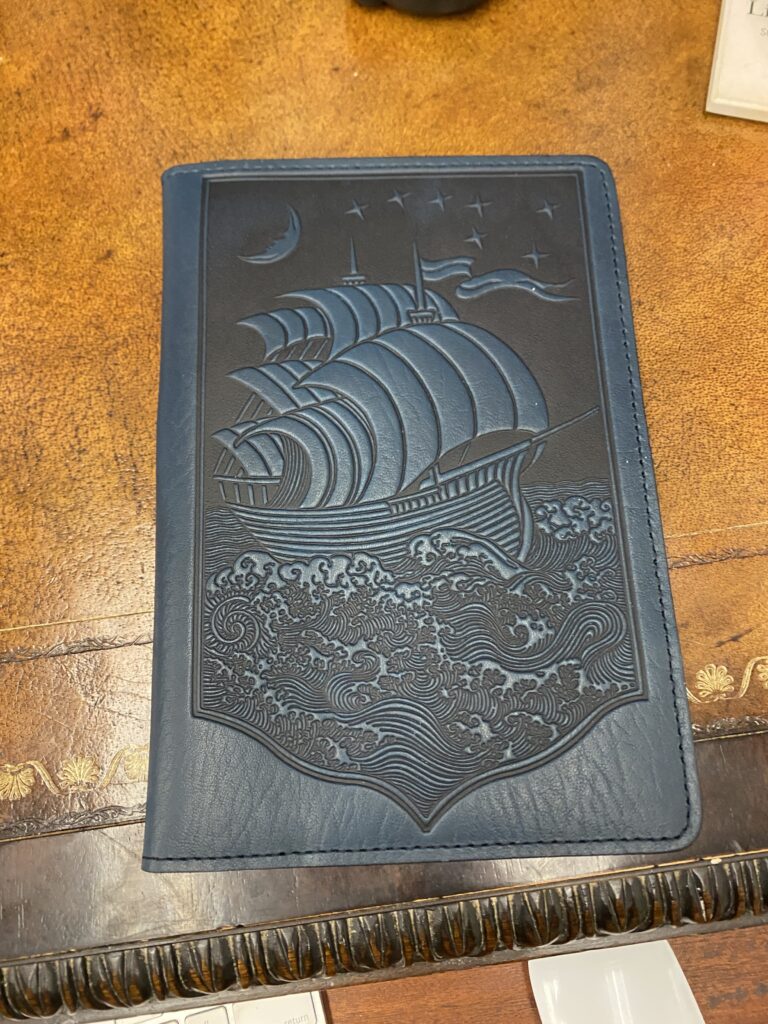
I want to distinguish between the work menu and the to-do list, as well. One is the genera and one is the species. The work menu is the general pot that holds the ingredients of the soup. The To-Do list, which I do first thing in the morning in what is known as a “small portfolio” again from Oberon Design (not affiliated with this post or paid sponsorship I just really like their stuff and I know when you see it you are going to ask where I got it).
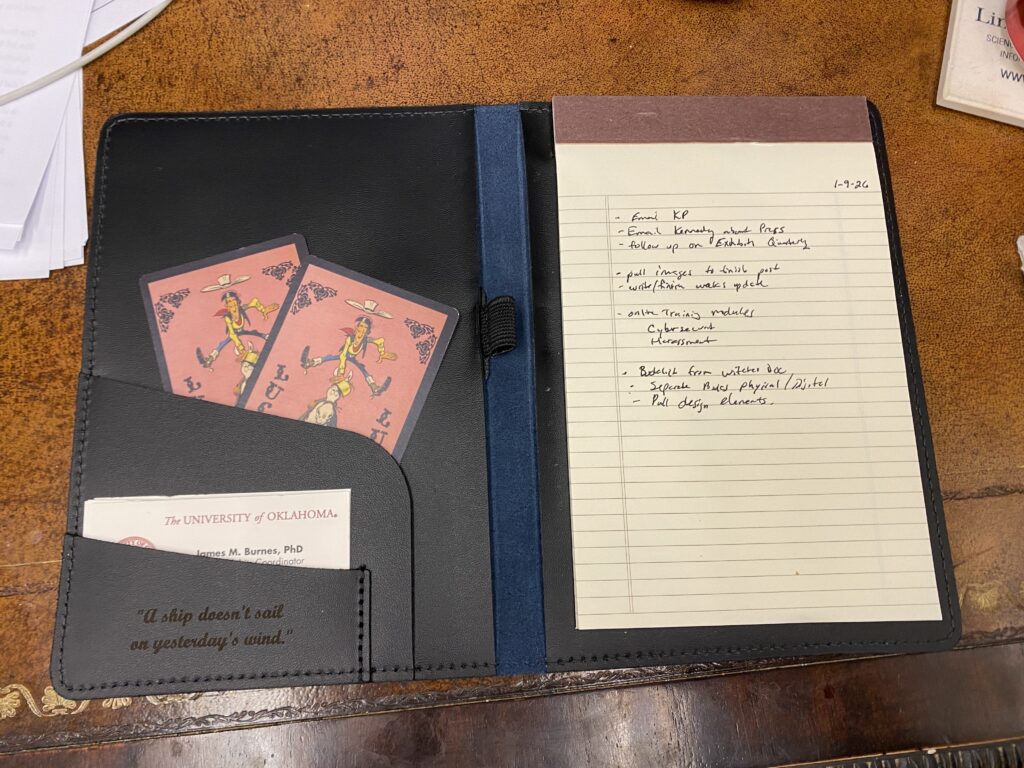
The “to-do” list is the name of the ingredients and how much of each I need to put into today’s soup. I don’t even like soup but a lifetime of studying geology has given me a plethora of food metaphors. I now do this every morning. By making this a routine too you know what is going to happen first thing at work, maybe it’s the first thing after coffee, maybe it’s with coffee, maybe it’s instead of standing in line for coffee.
An added benefit here is if you are driven by incremental task completion, you can put “make today’s to-do list” on the top and when you get to the end you can come back and mark it off. Boom! first item competed for the day.
But why, you might ask, have multiple things instead of just one three inch 3 ring binder of planning pages, scheduler, calendar, notes, and inspirational quotes? Because it provides more sectionality to your day. More nice little compartments of being that your brain likes to have. Open notebook, create to-do list, close notebook, task complete. Refer back to it as needed. But it isn’t lingering over you or in your mind all day.
Once it becomes routine it will also tap into muscle memory to remind you of what you are doing when you zone out. “Oh, I forgot what I was doing, wait, I am in the ship portfolio I need to finish the todo list” sort of thing. Plus it’s another nice thing that you have that will almost definitely (not) change your entire lifetime of habitry as soon as you get the cellophane wrap off of it.
I even have more than just work journals. I keep a running collection of recipes we use and like in a pocket notebook now covered with Scooby and Garfield cooking:
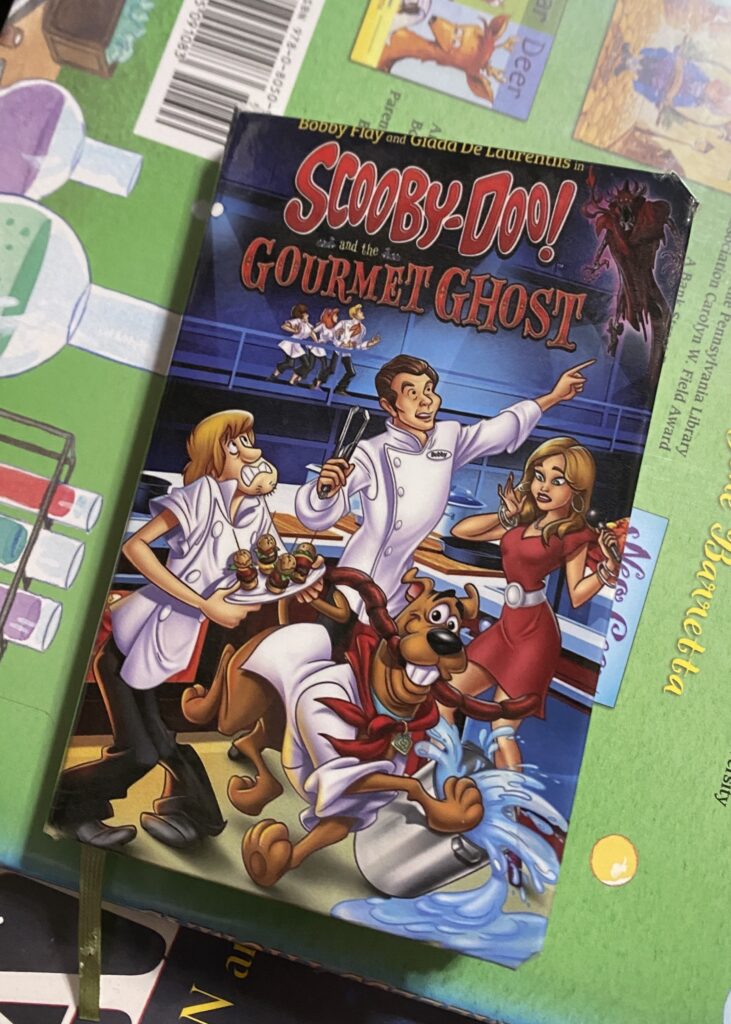
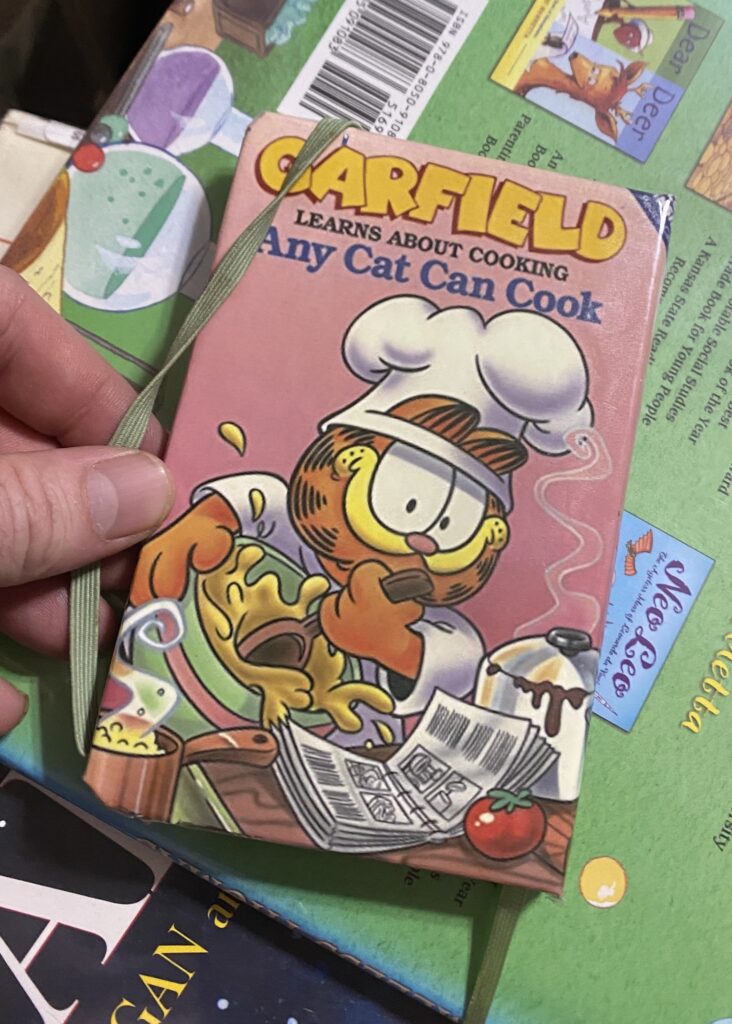
Remember when you just had a printed recipe to look at and not a seemingly infinite scrolling page filled with ads and 47 paragraphs of how the family emigrated from the steppes through western Europe before they get to how hot to preheat the oven? This is another little way you can get phones and tablets out of your life for a while.
I also finally got around to routinely keeping a ledger even though we don’t use checks anymore. I tried this a few times before. The first page of this was from 2008. The way that things hit, hold, or languish (pending) on our online banking page is… unstandardized to say the least. And guess what, flipping through here gives you a quick look at what you have (or haven’t) got left. You can check balances without scrolling or logging in which lessens the likelihood that you’d slide off the banking app and see what’s going on elsewhere while you already have your phone out.
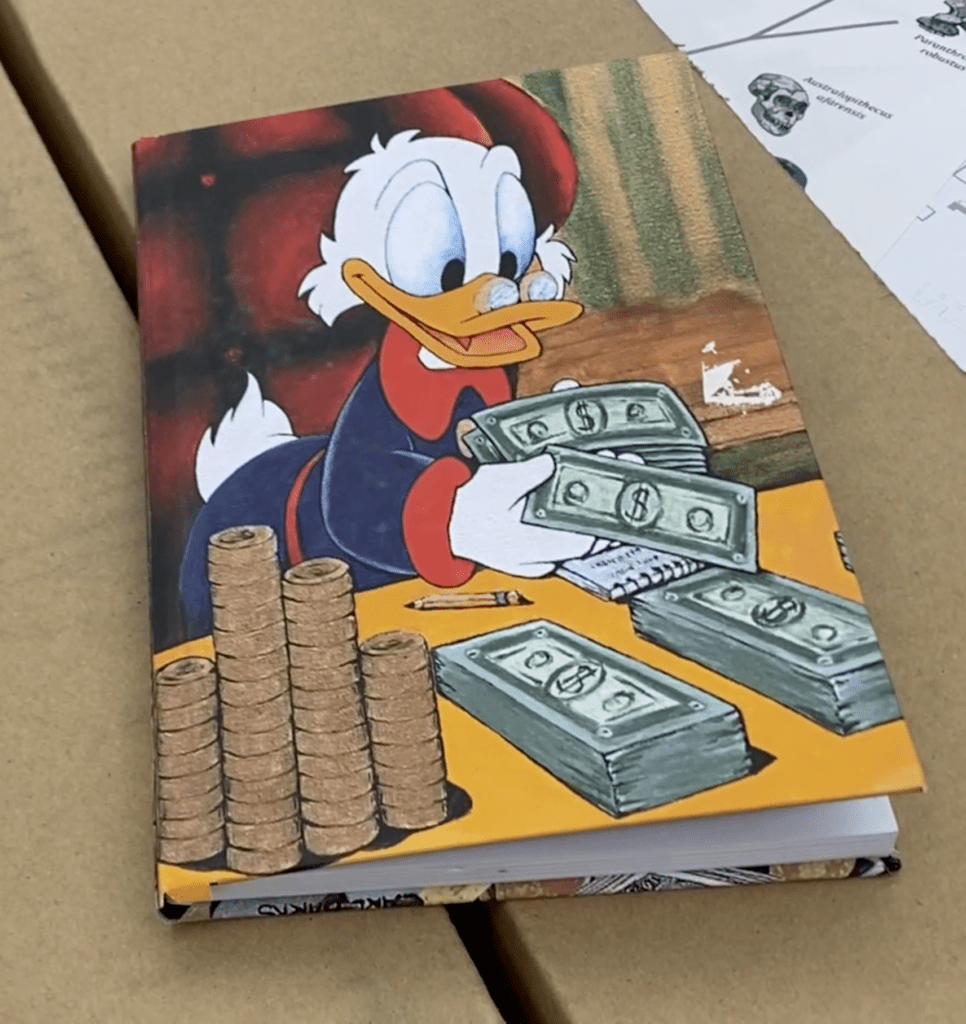
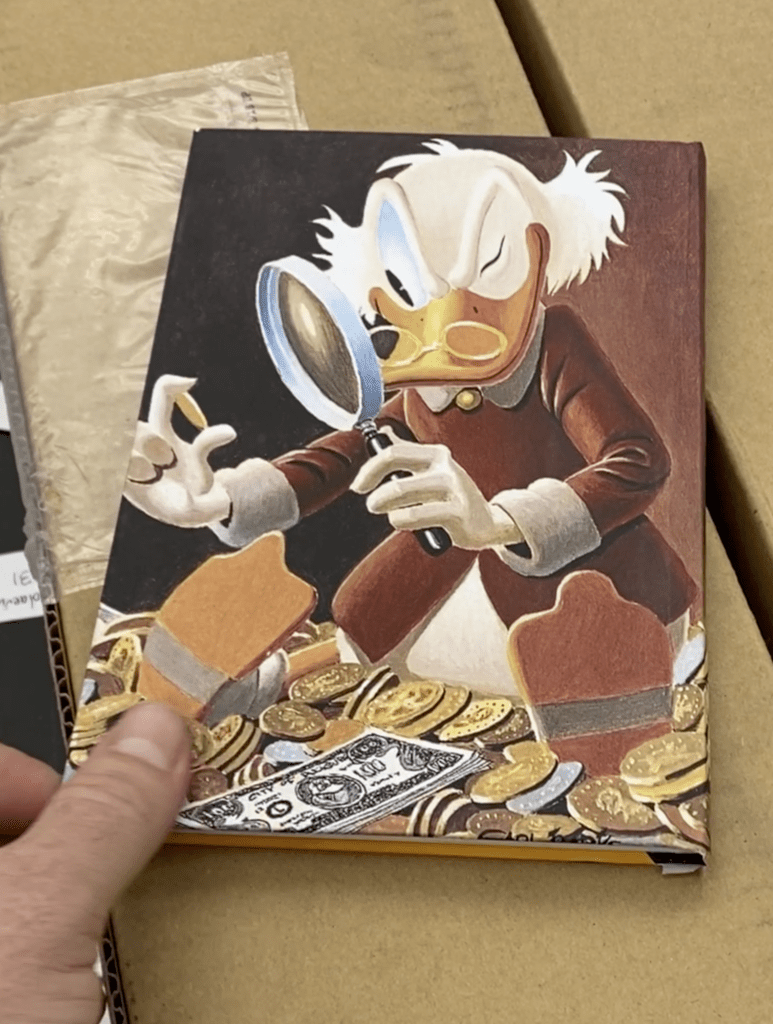
Of course you can keep this tally in any journal or notepad, but the ledger was built for numbers. It’s also a good way to get your kinds into budgeting and money management.
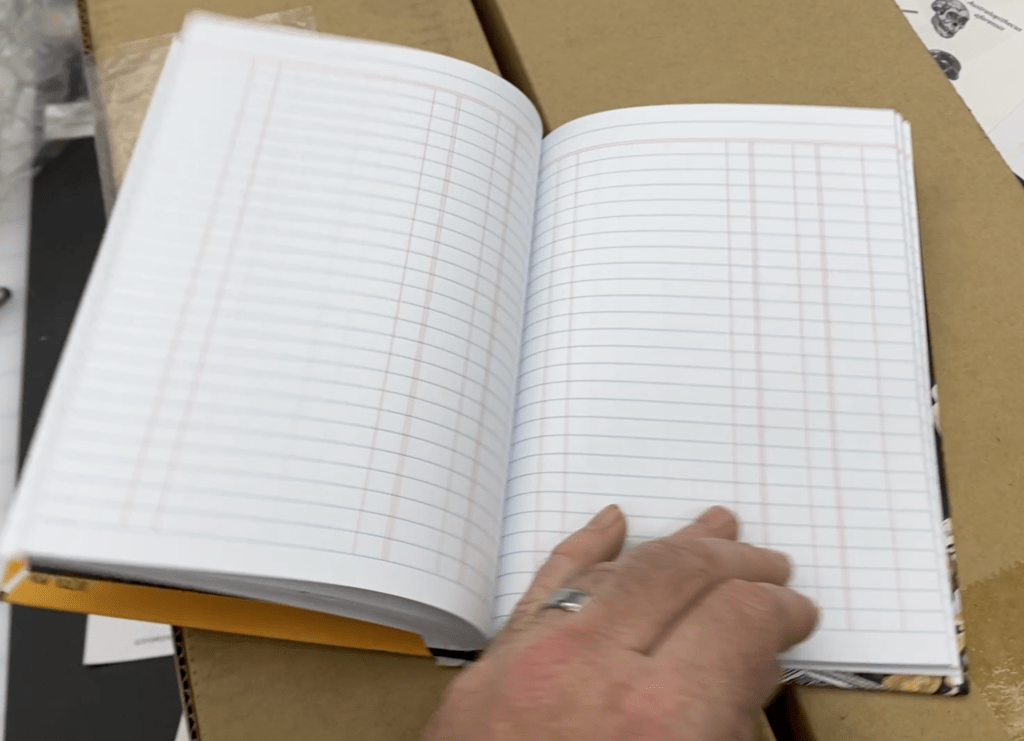
You don’t have to share your stuff with them, though you should share some if they are old enough to understand, but you can give them one for their allowance and expenditures. It’s never too early to learn about in and out and how to stay in the black. And it reinforces math skills.
One of my mantras at work is “organization is the only defense against anarchy.” And I think that is as true for our daily rhythms as it is for project management. If you ever want to see the value in routines have children.
Speaking of children, I would also like to suggest–and this may be the most important piece of advice on parenting that you’ve never received–that you buy your children (toddlers on up ) journals, or at least composition notebooks, if for no other reason than to have a dedicated place they can put stickers.
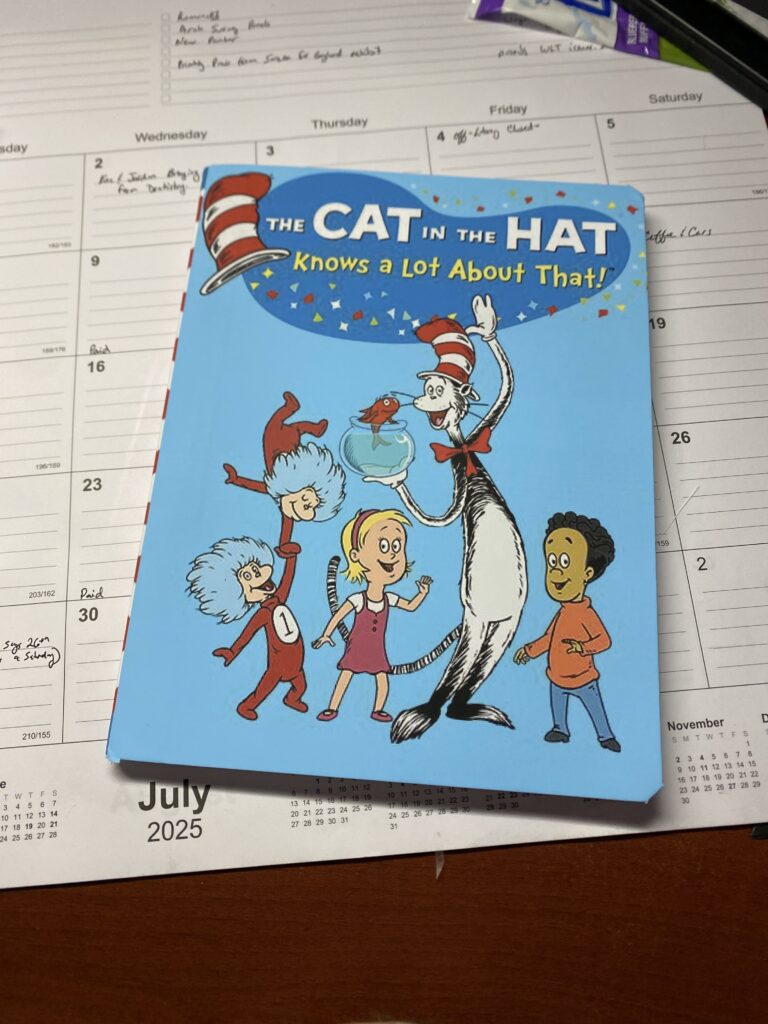
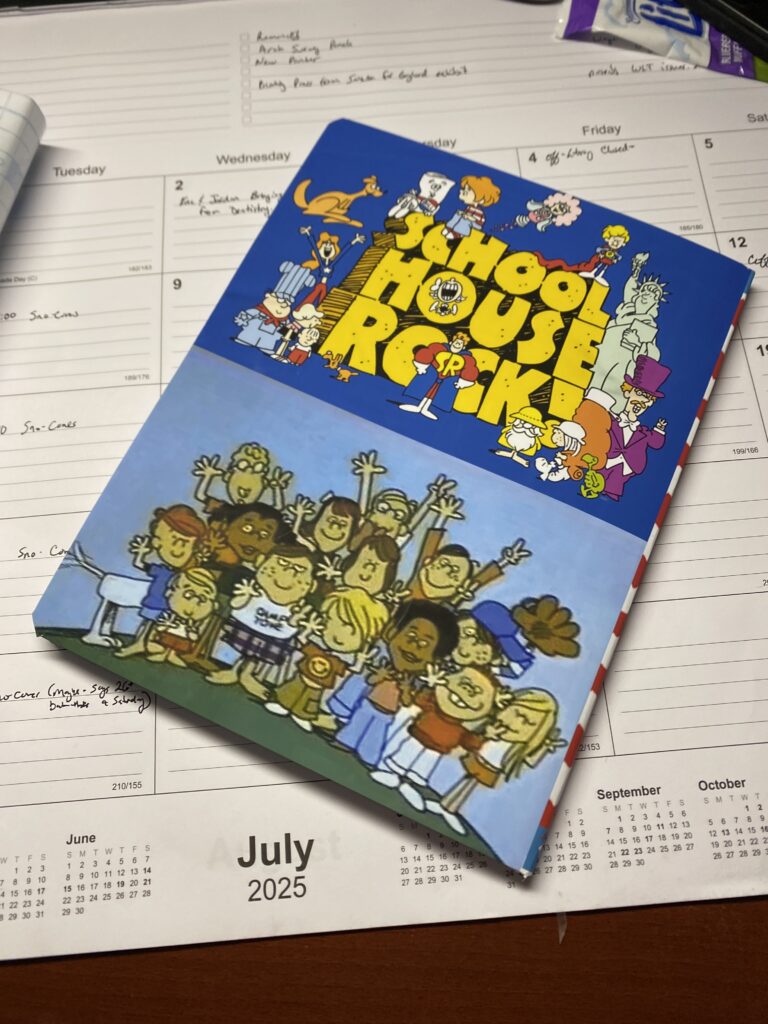
This does multiple things: it relieves the anxiety of loosing a sticker by using it and not being able to take if off the door/wall/car/window/stove/fridge/dishwasher/cat AND it keeps stickers from being put on the door/wall/car/window/stove/fridge/dishwasher/cat . It’s also a good place for fun notes on science kits and an extensive collection of coin rubbings. You don’t have to make special covers for them, but if you can and do then it gives another bit of something that will be tied to something they really liked when they were little. They also store easy either on a bookshelf or flat in a drawer.
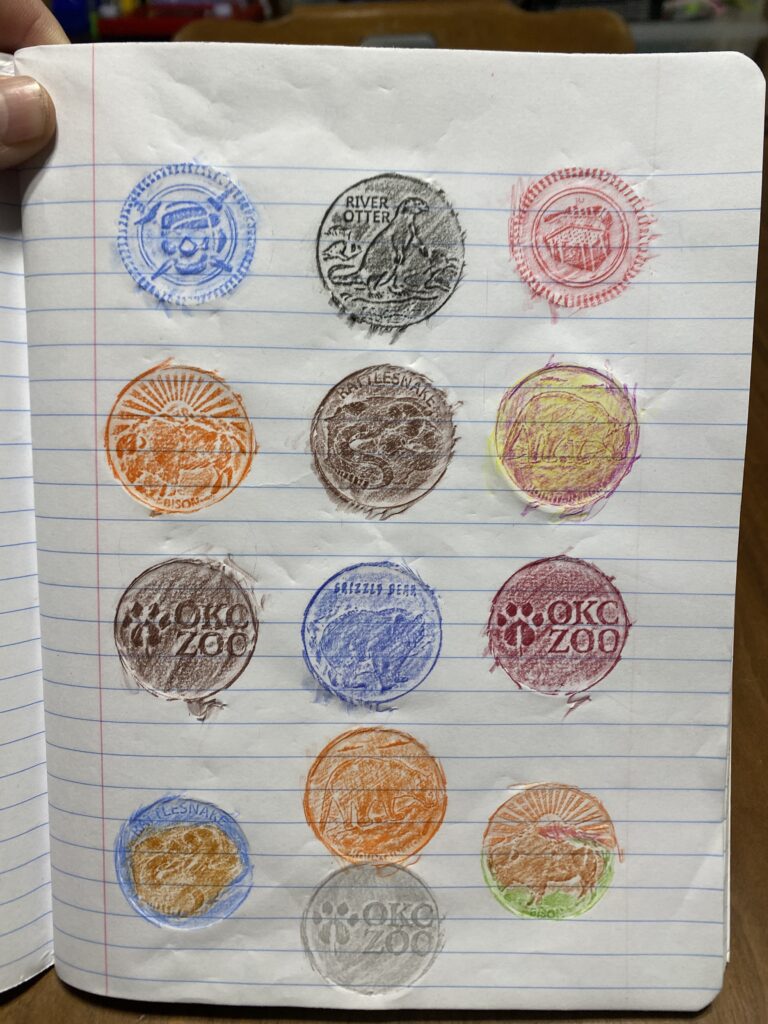
I say this also for older children too, as when I was growing up my best friend and I would write these insanely wild stories that included things like spitting kickboxing geese. We did this all on looseleaf notebook paper or some printed with early word processing software and printers, I have some of the latter, he has some of the former, but if only to have written them in a notebook. A cheap glue and tape bound one would have been fine, then they would all still be together, either here, there, or lost, but still together.
Journaling or notebooking or some other gerund isn’t only about organization and productivity it is also an amazing outlet for creativity. But that’s for another post. Though while you are here I will leave you with what Alan Watts said in writing:
“Advice? I don’t have advice. Stop aspiring and start writing. If you’re writing, you’re a writer. Write like you’re a goddamn death row inmate and the governor is out of the country and there’s no chance for a pardon. Write like you’re clinging to the edge of a cliff, white knuckles, on your last breath, and you’ve got just one last thing to say, like you’re a bird flying over us and you can see everything, and please, for God’s sake, tell us something that will save us from ourselves. Take a deep breath and tell us your deepest, darkest secret, so we can wipe our brow and know that we’re not alone. Write like you have a message from the king. Or don’t. Who knows, maybe you’re one of the lucky ones who doesn’t have to.”
So, go now. Resolute in the beginning of a new year, though it does feel like we’ve been given a secondhand one, that even if you can’t stick with it, even if it doesn’t transform your life in every (or any) aspect that you can still put pen (or pencil) to paper and rage against the screens in many small ways that add up. And they will be greater than the sum of their parts.
I have a really nice hardcover journal that I started right before I started my dissertation and we had children. It has a nice preface explaining my plan to document the process. That’s it, the rest is blank. It’s over 10 years of blank pages and at times I think that might be the most accurate documentation of the time passed. Perhaps I will pick it up again and write a memoir or a nobody in longhand. Though I think I will call it a memwar (That’s memory-war; Meme-war would be another book entirely, though maybe not altogether entirely.)
*Guess we’ll explore short blog posts at some other juncture since this one ballooned to over 2600 words. But, hey, the world needs more essayists.


In 2004, for my twentieth Christmas, I was given a leather bound journal. Not the carry around kind, more novel sized — not War and Peace but at least The Grapes of Wrath I’d say. At this point it’s about half full, which is poetic for middle aged and all that jazz, but doesn’t praise my fidelity to journaling. I have attended it about as faithfully as I have flossed my teeth: sometimes intensely for several days on end, sometimes only before going to the dentist. A few years have been skipped all together, and I had to later fill in minor details about say, the birth of new humans for example. The scope varies wildly from overheard conversations in gas stations, to personal spillings ala the Prophet Jeremiah, to a never finished poem about the birth of a nephew. I sat down several days ago to give ’25 a once over, to discover that the last entry was from August of ’24 …if I hurry up and get some reps in, maybe Dr. Morrison won’t notice.
This post gives me an idea for trying to purposely analog in the digital world. I would read an entire blog that was images of handwritten posts. I might do it myself if my handwriting wasn’t so bad, or so I’ve been told at least. I don’t see the need to complete any word past the first three letters. A trail of suggestion will suffice. Much more than that cometh of evil.
Having recently completed an exhibit in which a very important part of the collection was a notebook handwritten in Russian cursive, you have nothing to worry about with your handwriting. Also the more you write, the better it will get—if you write purposefully. I still haven’t looked to see exactly where my captain’s log left off, but by now I am certain it was another lifetime.